Dealing Extraction
Curia categorises every dealing on a NSW title search and writes purchaser-focused descriptions for each one, so you spend your time on the calls that need a conveyancer.
Every NSW title search lands with a list of dealings, each one a registered document the purchaser is bound by. Reading them in their raw form is slow, translating them into something a buyer actually understands is slower. Curia Contract Review does both, and drops the result into the report.
The problem with reviewing dealings by hand
A typical NSW title search references several dealings, sometimes dozens on an established property. Each one is a separate document in registry language: grantors and grantees, plan numbers, easement widths, obligations to maintain or not obstruct. The dealing has to be found, read, and explained to the purchaser in language they can act on. Done well it eats your morning. Done quickly it risks a one-line summary that misses what the dealing actually does to the property.
How Dealing Extraction works
Every dealing on the title, categorised
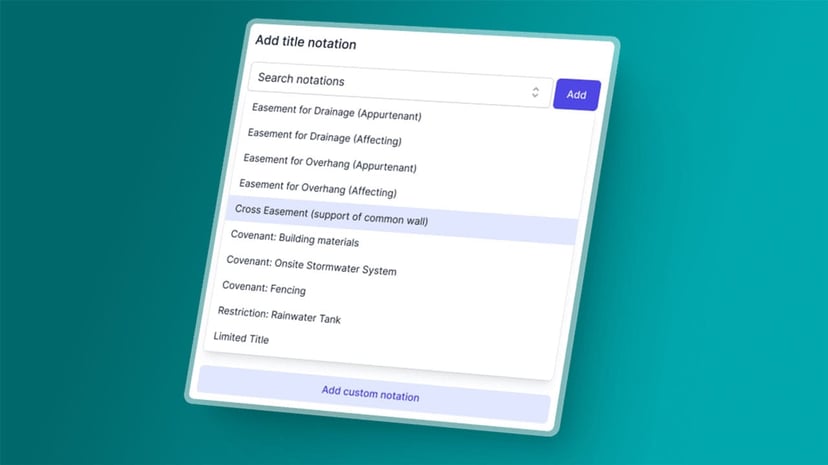
Curia parses every dealing on the title search and matches it to a category in your firm's library, drawing on more than 40 system defaults across easements, covenants, restrictions on use, leases, mortgages, caveats, planning agreements and beyond. The right description applies to each one, and you can extend the library with custom categories for anything unusual.
Purchaser-focused descriptions, written for the report
For each dealing, Curia produces a plain-English description aimed at the purchaser, not the conveyancer. It states whether the dealing benefits or burdens the property, describes the area or location where the plan makes that clear and sets out rights and obligations for the purchaser. Easements show who can enter and what they can do. Covenants show what can and can't be built. Restrictions show what the buyer cannot do with the land they're about to own.
You confirm, amend, or hide each one
Curia extracts. You decide. Each extracted dealing sits in the title search step of the review, ready to confirm, edit, hide from the final report or supplement with a custom entry. The descriptions you sign off flow straight into the report you deliver to your purchaser, no rewriting and no copy-paste from a precedent file.
Tuned to NSW conveyancing
Dealing Extraction is shaped around how the NSW Land Registry actually records encumbrances against a folio identifier, and around the NSW standard contract workflow that sits over it. The category library, the benefits-or-burdens analysis and the description templates all reflect NSW practice.
Where it sits in the review
Dealing Extraction pairs with Title Understanding , which interprets the title search itself. Together they take the title-side burden off the conveyancer and put a finished, purchaser-ready section into the report.
See Curia in action
See Curia handle a real NSW title search. Book a demo .